
Puja Patel, ALC
Recent Posts








Achieve a Healthy Weight According to your Dosha
According to Ayurvedic theory, each individual is born with varying combinations of the doshas (refer to intro to doshas), so every individual’s body size/type is different. Based on predominating doshas, some people are thin-framed and leaner, while others are thicker-boned and larger. Neither body type is right or wrong and in fact, Ayurveda proposes health at every size. Thus, there is no set routine to help you lose or gain weight. Instead, Ayurvedic medicine equips you with guidelines surrounding the types of foods and movements to incorporate according to your dosha. Following lifestyle prescriptions tailored to your body type will help you better approach your ideal weight – whether that’s through shedding some excess fat or adding some additional muscle. Once you know your dosha, check out our tips below to take one step closer balancing your body type.

Ayurvedic Recipes for Winter
Ayurveda has a distinct way of classifying the seasons based on the doshas. The seasons are categorized where the doshas are most prominent according to the environment.

Supporting the Immune System through Ancient Wisdom
As the winter continues and the weather becomes even colder, you may find yourself face to face with the common cold or flu. You may experience some sniffling or sneezing coupled with a runny nose or scratchy, tickling sensation in the back of your throat. When this happens, your natural instinct is to reach for your favorite over-the-counter medication to alleviate your symptoms. However, although the medication will make you temporarily feel better, it will neither shorten the duration of your illness nor cure it.

Ayurvedic Recipes for Fall
Ayurveda has a distinct way of classifying the seasons based on the doshas. The seasons are categorized where the doshas are most prominent according to the environment. Vata season: fall to early winter Kapha season: winter to spring Pitta season: summer to early fall
4 Common Mythconceptions about Ayurveda
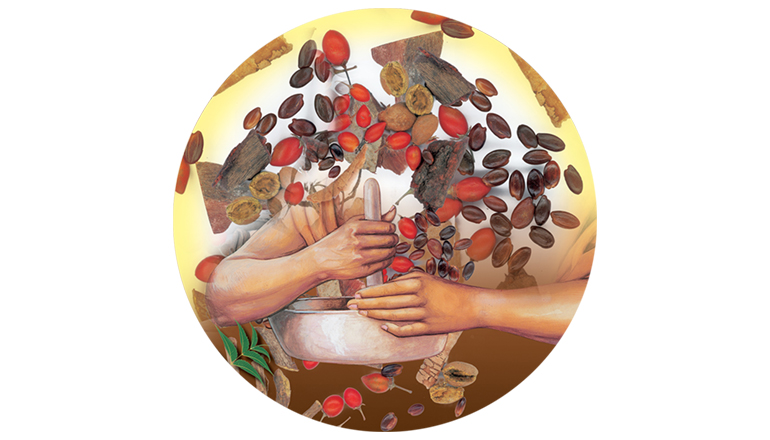
Ayurveda is a system of medicine with historical roots in the Indian subcontinent. It is based on the ideology that disease is due to an imbalance in the body, mind, and/or spirit. To regain balance between these three, Ayurveda encourages certain diet and lifestyle interventions, along with herbal and natural therapies.Due to the ancient tradition of Ayurveda and its roots in the East, it is often not appreciated in its entirety due to the lack of proper awareness and various misconceptions. Ayurveda is a time-tested system of medicine with origins dating back to 5,000 years ago. In order to gain a deeper insight and bring further clarity about Ayurveda, a few myth busters are explained below.

Herbsplaining Part 1: a guide into three immune boosting ayurvedic herbs
As the number of those affected by COVID-19 continues to increase, each of us must be wondering what we can do at home to help protect us better protect our families. For many, natural and holistic treatments are preferred or used as adjuncts to traditional allopathic treatment.
